Mold remediation in Atlanta, GA
Mold remediation in Atlanta is not licensed by the state: Georgia's Department of Public Health says mold work has no enforceable state or federal standards. So ask for a written plan before anyone starts. The EPA suggests a professional for mold larger than about 10 square feet, or any mold left by sewage or floodwater.
Your call goes to an independent company that works in the Atlanta area; ask whether it handles mold before it comes out.
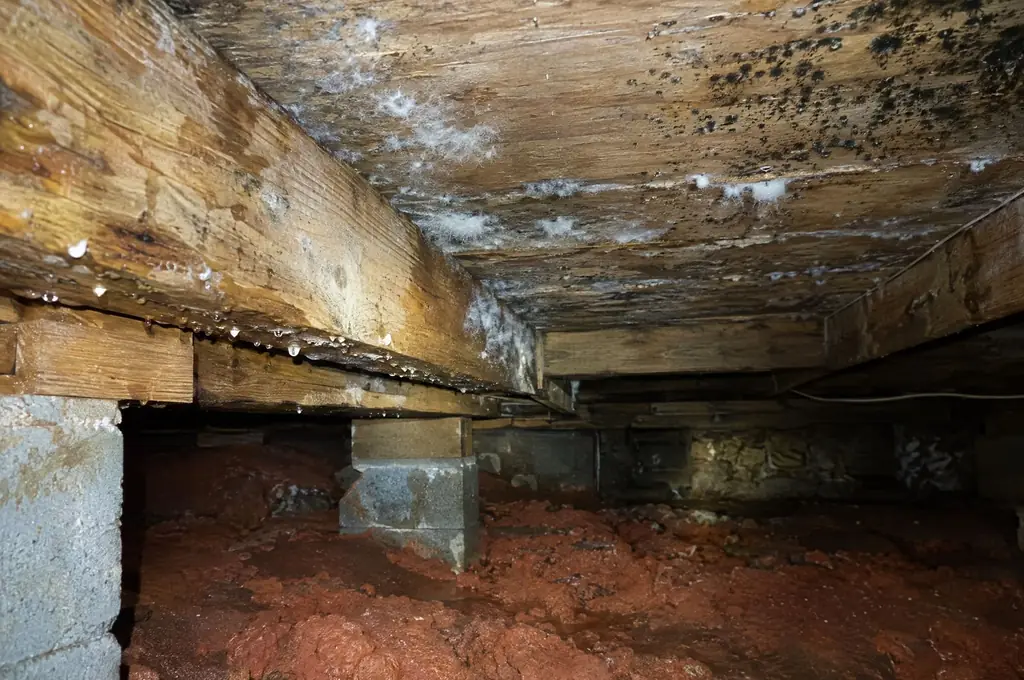
Illustrative photo.
Mold remediation and mold testing are separate jobs, and several Atlanta firms only test. A remediation company closes off the area, removes moldy materials that can't be cleaned, cleans what can be saved and dries the space so the mold does not come back. Fixing the leak or the humidity that fed it is part of the job.
Right now
- 1Stop the water first. Mold keeps growing as long as the material stays wet.
- 2Don't run the central air or heat if the mold is in the ducts, the air handler or the return.
- 3Keep children, pets and anyone with asthma or a weak immune system out of the area.
- 4Don't sand, scrape or dry-brush moldy drywall; it spreads spores through the house.
- 5Photograph the mold and anything stained for your own records before work starts.
Atlanta facts for this problem
Georgia's Department of Public Health says mold inspection, testing and remediation have no enforceable state or federal standards.
Source: Georgia Department of Public Health: Indoor Air Quality.
The department regulates mold only in tourist lodging such as hotels and motels, and says local housing codes generally carry no mold standard.
Source: Georgia Department of Public Health: Indoor Air Quality.
Georgia requires a Secretary of State license for general contractor work done for pay; specialty trades are exempt.
Source: Georgia Secretary of State: Residential and Commercial General Contractors FAQ.
The EPA treats mold covering less than about 10 square feet, a patch roughly 3 feet by 3 feet, as something most homeowners can clean themselves. For bigger areas, mold after heavy water damage, or growth caused by sewage or other contaminated water, it suggests an experienced professional and warns against running a heating or cooling system that may be contaminated.
Source: EPA: Mold Cleanup in Your Home.
The EPA advises holding indoor relative humidity under 60 percent, ideally in the 30 to 50 percent range.
About 42% of the homes in the 22 ZIP codes this site lists inside Atlanta were built before 1980, according to Census estimates for ACS 5-year 2020-2024.
Source: U.S. Census Bureau, ACS 5-year, tables B25034 and B25035, calculated by Atlanta Water Damage & Mold on November 14, 2026.
July is Hartsfield-Jackson's wettest month in the 1991-2020 normals, at 4.75 in.
Source: NCEI 1991-2020 normals via ACIS, Atlanta Hartsfield-Jackson International Airport, calculated by Atlanta Water Damage & Mold on November 18, 2026.
Related on this site: the Atlanta flood map by ZIP for how old the homes are in each ZIP, and the water in the crawl space page for the damp space under the floor where much Atlanta mold starts.
The job, step by step
Keep this list handy: every step should turn up in the company's daily log or photos.
Find the moisture
A leak, a sweating duct, a wet crawl space or a long-running drip is behind almost all indoor mold. The source is found and fixed first.
Close off the area
Plastic sheeting and negative air pressure keep spores from spreading while the work goes on.
Remove and clean
Moldy drywall, insulation and carpet come out in sealed bags. Framing and other solid surfaces are cleaned and dried.
Dry the space
Dehumidifiers bring the area below the EPA's 60 percent humidity mark so growth stops.
Check the result
A visual check, moisture readings and, if you ask for it, testing by an independent firm before walls are closed.
How insurance usually treats it
Most homeowners policies cover mold only when it comes from a covered water loss, such as a pipe that burst, and many cap the amount. Mold from humidity, a slow leak or upkeep problems is often excluded. The mold section of your policy says what applies.
General information, not insurance advice. Your policy decides. See flood insurance in Atlanta and Georgia's rules at a glance.
What changes the scope
- How many square feet are affected and where (crawl space, attic, wall cavity)
- Whether the mold followed clean water or sewage and floodwater
- How much drywall, insulation or flooring must be removed
- Whether ducts or the air handler are involved
- Days of dehumidification needed to bring the space below 60 percent
No prices here. The company takes moisture readings in the house and writes its own itemized estimate, and the water damage estimator shows the lines that estimate ought to carry.
Questions people ask
Do mold remediation companies in Georgia need a state license?
No. The Department of Public Health says mold inspection, testing and remediation have no enforceable state or federal standards. Georgia does license general contractors through the Secretary of State, which matters if the job turns into rebuilding.
Can I clean small mold myself?
By the EPA's guide, a patch smaller than about 10 square feet (roughly 3 feet on a side) is usually a job a homeowner can do. Wear gloves and an N-95 respirator, scrub hard surfaces with detergent and water, and throw out moldy porous materials.
Why does mold grow so fast in Atlanta houses?
About 1 in 5 single-family homes in metro Atlanta sits on a crawl space (2023 American Housing Survey), and crawl spaces and attic air handler closets stay damp through Georgia's humid summers. The EPA's mark is indoor humidity under 60 percent; the weather page shows the airport's humidity and dew point right now.
I rent. Who handles the mold?
Your landlord, since the building is theirs. Report it in writing with photos. Georgia's Department of Public Health notes that housing codes generally don't set mold standards, so a written record matters.